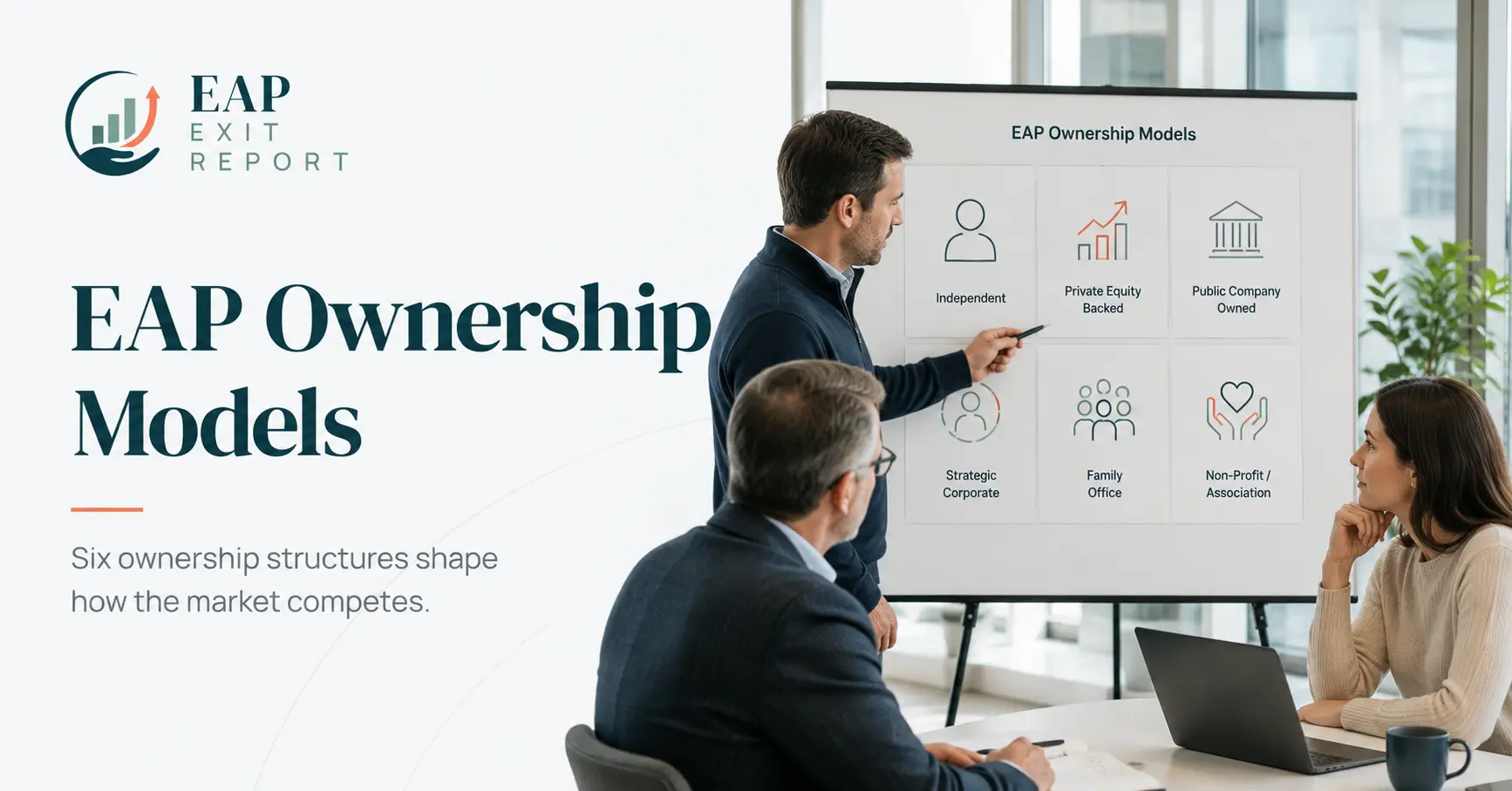
EAP Ownership Models: The 6 Types That Own the Market
Most competitive analysis in this sector stops at the name, which is why EAP ownership models are so rarely part of it. You know who

Most competitive analysis in this sector stops at the name, which is why EAP ownership models are so rarely part of it. You know who

Ask a benefits consultant what an employee assistance program (EAP) is and you’ll get a clear answer. Ask an investor, and about a third of

Ask four research firms how large the global employee assistance program (EAP) market was in 2025 and you will get four different answers, the largest
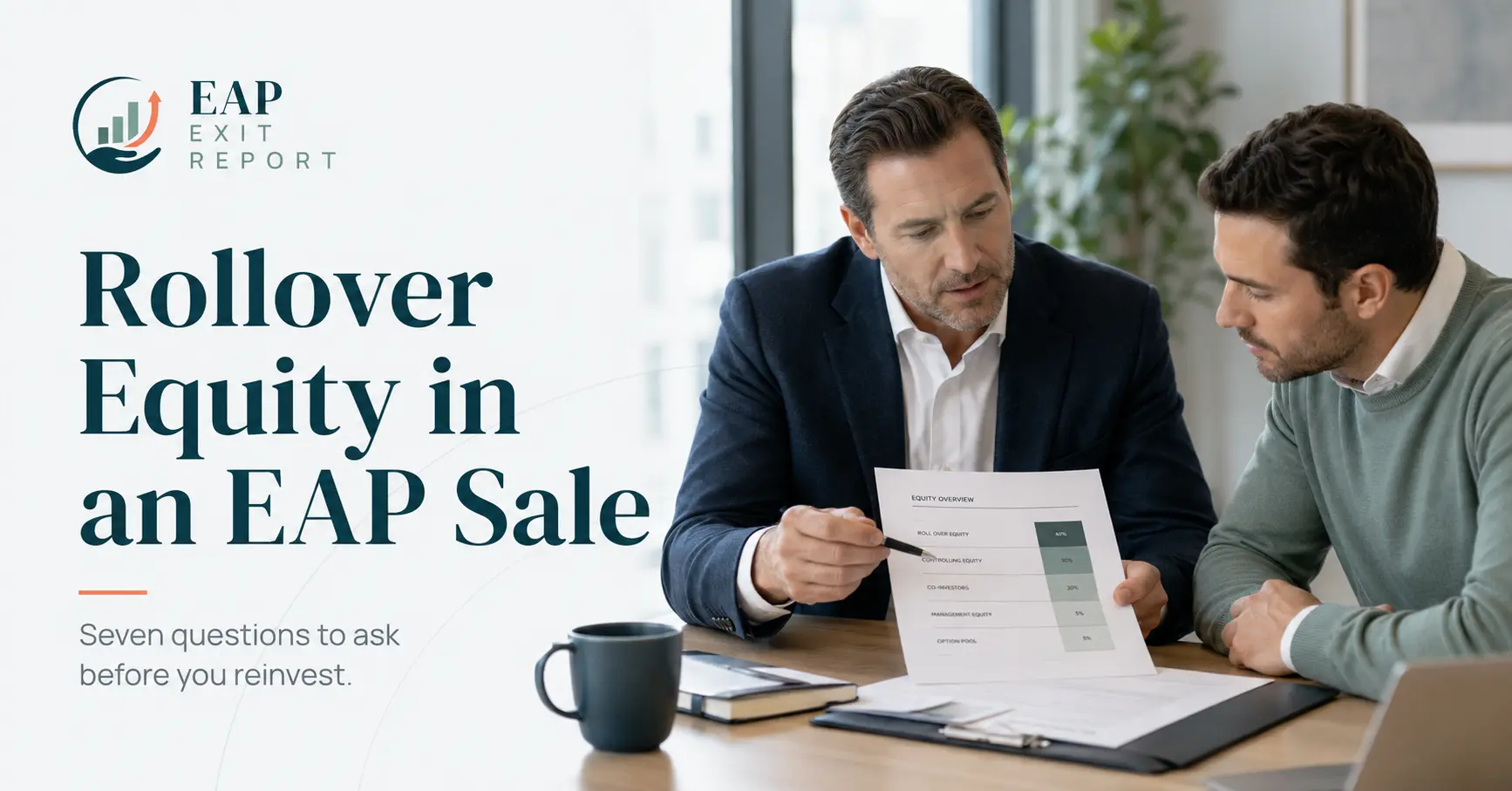
Somewhere in the offer, a sentence explains that thirty percent of your consideration will be reinvested into the acquiring entity. It rarely gets much discussion,

An offer arrives with a headline figure. Somewhere in the second or third page, a portion of it is described as contingent, and there’s a
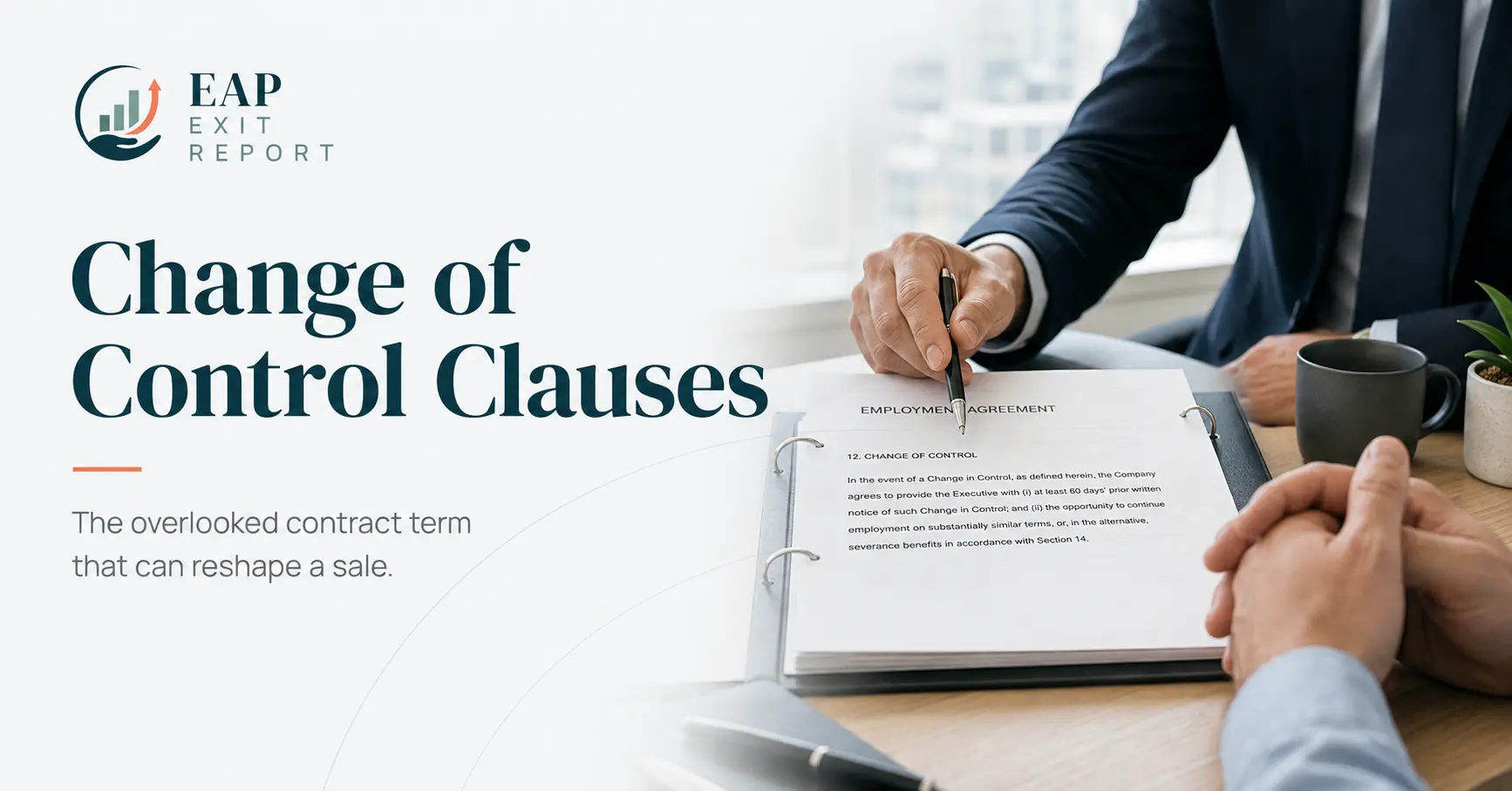
Somewhere in your largest employer agreement, probably under a heading like “Assignment” or “Miscellaneous,” there is a paragraph about what happens if your company is

Suppose two offers land in the same week at the same headline number. One is from a strategic buyer — an established employee assistance program

The first time most employee assistance program (EAP) owners encounter private equity is a phone call from someone whose title includes the word “associate,” asking

Owners tend to imagine that buyers assess a business through some proprietary lens they’d never share. They don’t. EAP acquisition criteria are remarkably consistent across
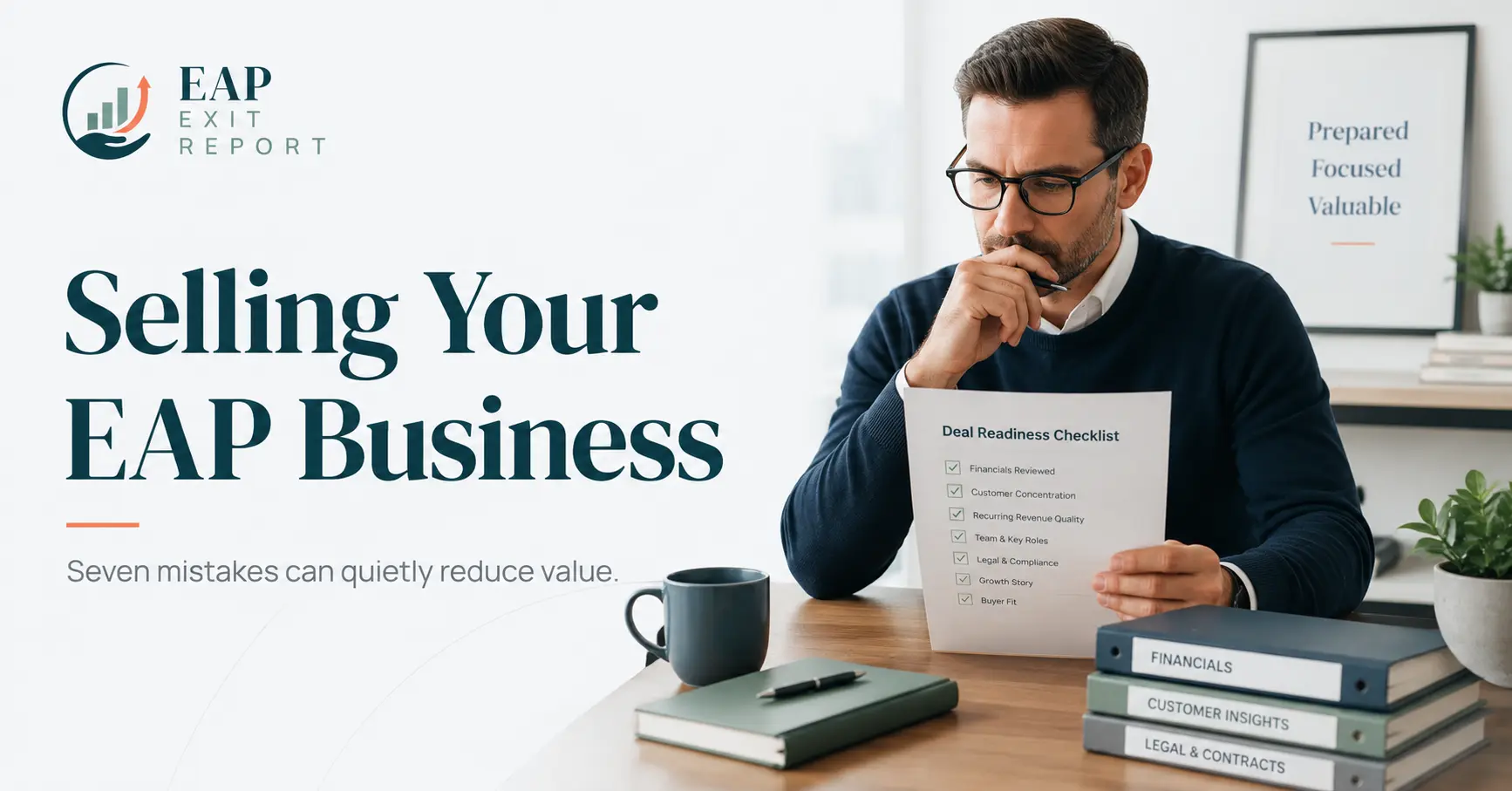
Almost nobody loses money selling your EAP business the way owners fear — through some dramatic act of bad faith by a buyer, discovered too

There’s a specific week in every transaction that owners remember afterward. The letter of intent is signed, everyone shook hands, and then a document arrives

Most employee assistance program (EAP) owners start thinking seriously about a sale roughly four months before they want one. EAP exit planning done at that